🔍
Product Description
Ivermectin is widely used in cattle, sheep, horses, pigs, gastrointestinal nematodes, lung nematodes and parasitic arthropod, canine intestinal nematodes, ear mites, scabies mites, silk worm and microfilariae, gastrointestinal nematodes and external parasites and poultry. This product belong to the broad-spectrum drug resistant parasites.
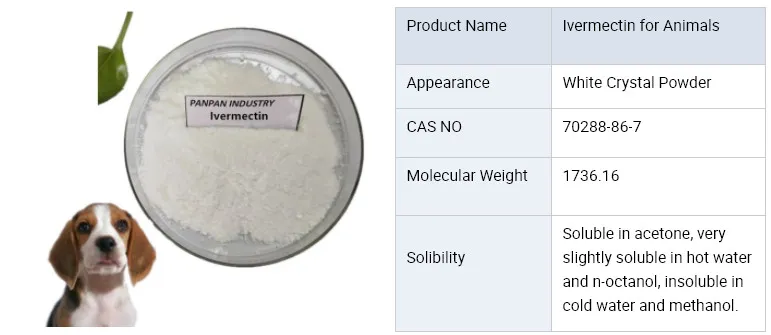

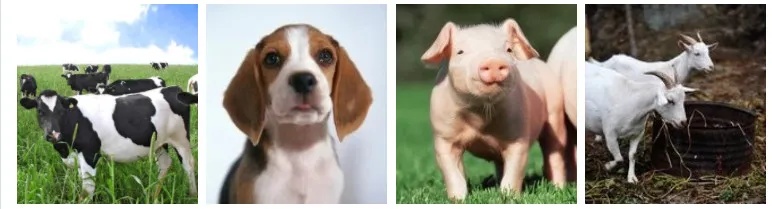
In veterinary medicine ivermectin is used against many intestinal worms (but not tapeworms), most mites, and some lice. Despite this, it is not effective for eliminating ticks, flies, flukes, or fleas. It is effective against larval heartworms, but not against adult heartworms, though it may shorten their lives. The dose of the medicine must be very accurately measured as it is very toxic in over-dosage.
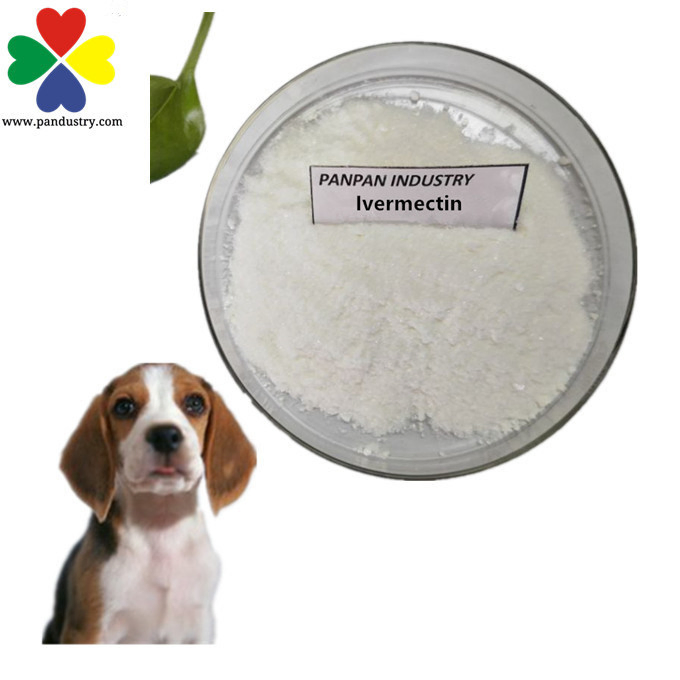
It is sometimes administered in combination with other medications to treat a broad spectrum of animal parasites. Some dog breeds (especially the Rough Collie, the Smooth Collie, the Shetland Sheepdog, and the Australian Shepherd), though, have a high incidence of a certain mutation within the MDR1 gene (coding for P-glycoprotein); affected animals are particularly sensitive to the toxic effects of ivermectin.
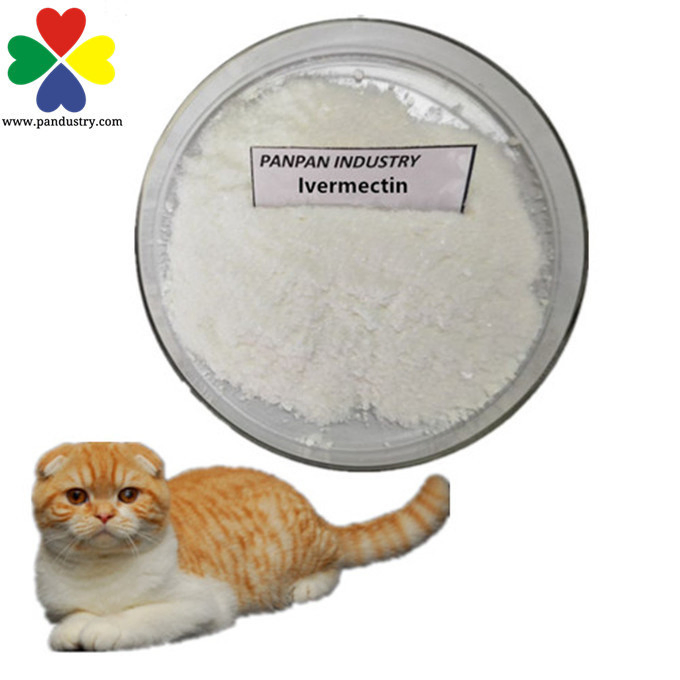
Clinical evidence suggests kittens are susceptible to ivermectin toxicity. A 0.01% ivermectin topical preparation for treating ear mites in cats is available.
Ivermectin is sometimes used as an acaricide in reptiles, both by injection and as a diluted spray. While this works well in some cases, care must be taken, as several species of reptiles are very sensitive to ivermectin. Use in turtles is particularly contraindicated.


❓
Frequently Asked Questions
What are the primary uses of Ivermectin in veterinary medicine?
It is widely used to treat gastrointestinal nematodes, lung nematodes, and various parasitic arthropods in cattle, sheep, horses, and pigs.
Is Ivermectin effective against all types of parasites?
While effective against many intestinal worms and mites, it is not effective for eliminating ticks, flies, flukes, or fleas.
Are there specific dog breeds sensitive to Ivermectin?
Yes, breeds like Rough Collies, Smooth Collies, Shetland Sheepdogs, and Australian Shepherds may have an MDR1 gene mutation making them sensitive to toxic effects.
Can Ivermectin be used for cats and kittens?
Kittens are susceptible to toxicity. However, a 0.01% topical preparation is specifically available for treating ear mites in cats.
Is Ivermectin safe for reptiles and turtles?
It can be used for some reptiles as an acaricide, but it is strictly contraindicated for use in turtles.
How is the product packaged for transport?
The standard specifications are 1 kg per aluminum foil bag or 25 kg per drum, shipped via global couriers like DHL, FedEx, and EMS.

 Vetsys Pharmaceutical