Vetsys Pharmaceutical
Water-soluble powders can make disease-control treatments easier to measure, mix, and apply. But their value depends on the product, target disease, water quality, and application method. The question “what are the advantages of water-soluble powders for disease control” deserves a practical answer, not a blanket claim that one formulation is always better.
When a product dissolves as intended, it can form a consistent spray mixture with fewer visible particles settling at the bottom of a tank. That may simplify mixing and help operators apply a more even dose across leaves or other treated surfaces. Dry formulations can also be easier to store and transport than ready-to-use liquids, since they often require less packaging volume. These benefits are conditional. Some powders dissolve slowly, and hard water, temperature, or incompatible tank partners may affect mixing. Always follow the product label and use only for approved purposes.
A useful safety principle comes from Paracelsus, the physician and toxicology pioneer: “The dose makes the poison.” It is not a direct endorsement of any formulation. It is a reminder that accurate measuring and careful handling matter. In practice, users should check solubility instructions, wear the protective equipment specified on the label, and avoid assuming that a clear mixture guarantees effective disease control. Small details count. A clump in the measuring cup or residue in the sprayer can change application quality. This introduction examines where water-soluble powders offer genuine advantages, where they may fall short, and what evidence users should review before choosing them.
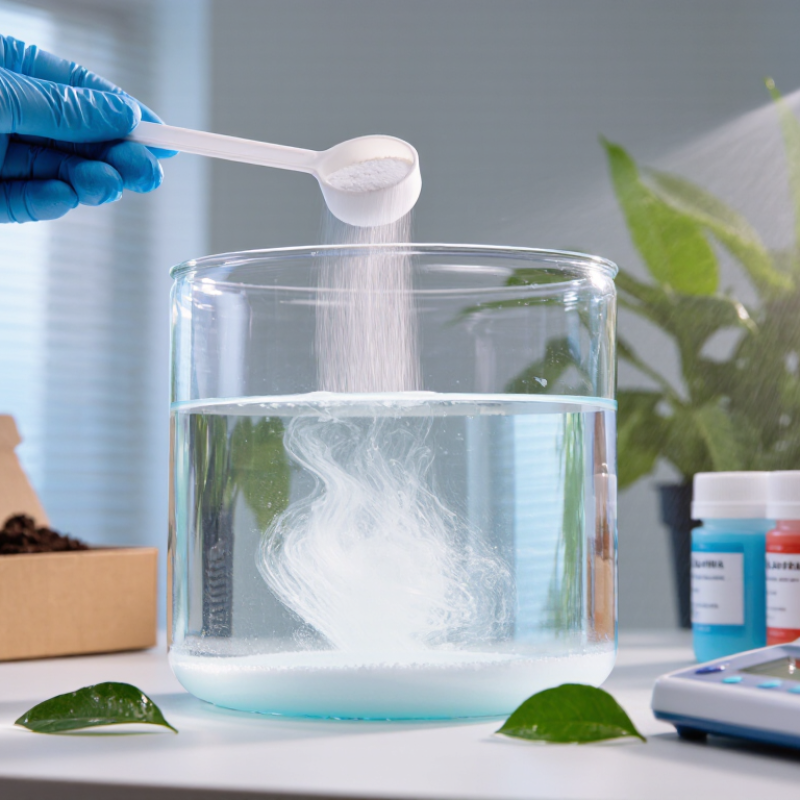
Water-soluble powders are dry formulations designed to be mixed with water before use. A measured amount is added to a spray tank, where the product dissolves or disperses according to its formulation. Not every powder forms a perfectly clear solution. A slight haze can be normal, but persistent clumps may signal poor mixing or unsuitable water.
Once mixed, the active ingredient can be applied across leaves, stems, or other target surfaces. Even coverage matters: disease organisms may persist on untreated areas, especially beneath leaves or near dense growth. Agitation helps keep the mixture consistent during spraying. Clean water, accurate measuring, and the product label’s mixing directions also affect performance. Small details matter.
These products can make storage and transport simpler than carrying ready-to-use liquid mixtures. They do not automatically control disease better, though. Results depend on the crop, disease, timing, weather, and correct application. Protective equipment and label precautions should be followed, and leftover spray should be handled as directed. I’ve found that rushed mixing is easy to underestimate; powders can cling to a scoop or tank wall, so careful rinsing and checking are worthwhile. Water-soluble powders are a tool, not a substitute for monitoring plants or choosing an appropriate treatment.
Water-soluble powders can make crop treatment easier to measure and carry, but good results depend on careful mixing. Read the product label before opening the package; it specifies the approved crop, water volume, mixing order, and protective equipment. Use a clean tank and fresh water. Hard water or a dirty container can affect how some products disperse.
Add water to the tank as directed, then introduce the powder gradually while keeping the water moving. Avoid pouring it in all at once, which can leave stubborn clumps around the tank walls. Keep agitation running until the mixture looks even. A small test batch can reveal mixing problems before you prepare a full tank. Never assume that two products are compatible; check their labels first.
Apply the mixture with calibrated equipment, following label directions for rate and timing. Walk or drive at a steady pace so one strip does not receive more spray than the next. Check nozzles for blockages, and avoid spraying in strong wind, when droplets may drift onto nearby areas. Rinse equipment as directed after use, and handle leftover mixture according to the label. Even careful mixing has limits: weather, crop condition, and uneven coverage can all affect control.
| Topic | Water-Soluble Powder (SP/WSP) | Practical Implication for Disease Control |
|---|---|---|
| What happens in water | The product is designed to dissolve in water and form a spray solution when mixed as directed. Formulation behavior can vary, so follow the product label. | A properly prepared solution can be convenient to measure and apply. The formulation alone does not determine how well a disease is controlled. |
| Potential handling advantage | Some soluble powders avoid the need to keep insoluble particles suspended during spraying. | They may reduce settling-related agitation needs compared with some suspension-based products, but agitation and equipment instructions on the label still apply. |
| Comparison with wettable powder (WP) | A soluble powder is intended to dissolve; a wettable powder disperses as fine particles and generally requires agitation to remain evenly suspended. | Uniform mixing helps deliver a consistent labeled dose. Do not assume one formulation is more effective for every crop, pathogen, or application method. |
| Active ingredient and disease target | Performance depends on the active ingredient, its approved use, the pathogen, timing, and whether the product acts by contact, locally, or systemically. | Confirm that the crop and disease are listed on the label. Use the product only for approved uses and at the labeled rate. |
| Step 1: Prepare | Read the label, wear the specified personal protective equipment, check the sprayer, and use the water volume and mixing rate stated for the crop. | Accurate preparation and a calibrated sprayer help achieve the intended coverage without exceeding the label rate. |
| Step 2: Mix | Partly fill the tank with clean water, measure the product accurately, add it as directed, and mix until dissolved. Add remaining water while mixing if the label instructs. | Follow the specific mixing order and agitation instructions. Do not use a generic rate in place of the label rate. |
| Step 3: Check compatibility | Before combining products, check label compatibility directions. If permitted, a small jar test can help identify visible clumping, separation, or excessive settling. | A jar test does not confirm crop safety or legal compatibility; follow all label directions and seek qualified advice when uncertain. |
| Step 4: Apply to crops | Apply with suitable, calibrated equipment and the label-specified spray volume, nozzle, timing, and coverage. Avoid drift and observe weather restrictions. | Good coverage is especially important for contact fungicides. Application timing and repeat intervals must follow the label and local guidance. |
| After application | Observe re-entry intervals, pre-harvest intervals, cleaning directions, and disposal instructions on the label. | Rotate modes of action when directed by resistance-management guidance, and integrate chemical control with sanitation, resistant varieties, and other recommended practices. |
Important: Water-soluble powders can offer practical mixing and handling benefits, but they are not automatically more effective than other formulations. Always follow the registered product label and applicable local regulations.
When a water-soluble powder dissolves fully, it can distribute its active ingredient more evenly through a properly mixed spray tank. That matters when treating leaves with dense canopies or narrow surfaces where missed patches may allow disease to spread. FAO estimates that plant pests cause annual losses of up to 40% of global food crops; its 2021 scientific review highlights the scale of this agricultural challenge. Dissolving can simplify measuring and mixing, but it does not make every product suitable for every crop or pathogen. Follow the product label, use clean water, and calibrate equipment. Small details matter.
A practical advantage is visible in the tank: fewer undissolved particles can mean less residue in filters and nozzles. Still, water temperature, hardness, and mixing order can affect how a formulation behaves. A powder that looks dissolved may not guarantee ideal coverage or disease control. Product-specific directions and local agricultural guidance remain essential.
Tips: Add the measured powder gradually while stirring, then check the tank and nozzle flow before spraying. Avoid guessing the dose. Keep protective equipment on, and record weather and application conditions; that record can reveal what needs adjusting next time.
Water-soluble powders can offer practical advantages over liquid concentrates, granules, and ready-to-use formulations. Their dry form may reduce shipping weight and simplify storage when packaging stays sealed and dry. At the tank, add the measured powder to water as directed, then maintain agitation for an even mixture. A clean measuring tool helps limit dosing errors and residue. That matters. Yet not every powder dissolves or behaves the same way.
For disease control, a sprayable solution can coat foliage directly, unlike many granules intended for soil application or gradual release. Compared with some emulsifiable concentrates, powders may avoid certain solvent-related handling concerns. The trade-off is easy to miss: dry products can create dust during pouring and cake in humid storage. Small details matter. Control still depends on the active ingredient, correct diagnosis, timing, water quality, and leaf coverage. Rain after application may reduce deposits, while poor agitation can leave uneven concentrations in the tank. Follow the product label and use specified protective equipment; formulation alone does not guarantee better disease control.
Water-soluble powders can simplify measuring and mixing, but their performance depends on more than how quickly they disappear in water. Water hardness, pH, temperature, and mixing time may affect dissolution or product stability; follow the product label rather than assuming every powder behaves alike. A clear tank is not proof of good coverage. Not enough, by itself. Calibrate the sprayer, check the nozzle pattern, and apply at the disease stage and weather conditions specified on the label. FAO’s 2020 plant-health materials report that plant pests destroy up to 40% of global crops annually, underscoring the value of reliable control practices (FAO, International Year of Plant Health, 2020).
Safe use starts before mixing. Wear the protective equipment listed on the label, avoid breathing dust while opening the package, and mix in a ventilated area away from wells and drains. Measure carefully; leftover spray should not be poured onto soil or into waterways. WHO and FAO’s International Code of Conduct on Pesticide Management emphasizes responsible handling throughout pesticide use (2014). Rinse and maintain equipment as directed, and keep people and animals away until the label permits re-entry. Even experienced users can overlook small leaks or a blocked nozzle. That deserves a second look. Check local product directions, since approved uses and precautions can differ.
They are dry formulations mixed with water before spraying. Some mixtures may look slightly hazy.
Not always. Persistent clumps can signal poor mixing or unsuitable water. Check the tank carefully.
Measure the amount carefully and add it gradually while stirring. Keep the tank agitated during spraying.
Missed areas can let disease persist, especially under leaves or inside dense growth. Check both sides.
Fewer undissolved particles may reduce residue in filters and nozzles. Still, check nozzle flow before spraying.
No. They may be lighter to store and transport, but performance depends on the formulation and use.
Water quality, temperature, hardness, and mixing order can matter. I sometimes underestimate those details.
Follow the product label for protective equipment and leftover spray. Keep the measuring tool clean, too.
Water-soluble powders are crop-protection formulations designed to disperse or dissolve in water before application. Once mixed according to the product label, they can be applied to crops using suitable spraying equipment, helping distribute the active ingredient across targeted plant surfaces. Their ability to mix with water can support consistent coverage and make them practical to measure, store, and transport when handled properly.
So, what are the advantages of water-soluble powders for disease control? Compared with some other formulations, they may offer convenient mixing, even application, and efficient use of treatment materials. Their performance depends on factors such as water quality, mixing technique, weather, crop type, disease pressure, and application timing. Users should follow label directions, wear recommended protective equipment, avoid drift and runoff, and clean equipment responsibly. These practices help improve treatment effectiveness while protecting crops, people, and the surrounding environment.
