 Vetsys Pharmaceutical
Vetsys Pharmaceutical
Vetsys Pharmaceutical
Properly diluting farm disinfectants is essential for effective sanitation in agricultural settings. According to a report by the American Farm Bureau Federation, improper dilution can lead to reduced efficacy and potential harm to crops and livestock. Dr. Emily Carter, an expert in agricultural biosecurity, emphasizes, “Understanding how to properly dilute concentrated farm disinfectants can save not only produce but also the farm’s reputation.”
Mistakes in dilution ratios are surprisingly common. A survey conducted by the Agricultural Safety and Health program found that nearly 30% of farmers reported using disinfectants inadequately. This not only compromises sanitation but can also lead to costly outbreaks of disease. Ensuring the right concentration can make a significant difference. Experts recommend regular training sessions for farm workers on dilution techniques.
Farm managers must regularly review their practices. It could mean the difference between a healthy harvest and an outbreak of pathogens. Remember, knowing how to properly dilute concentrated farm disinfectants is vital. Being knowledgeable in this area enhances both productivity and safety on the farm. Balancing effective sanitation with proper practices should be a priority for all agricultural operations, yet many continue to overlook this critical step.
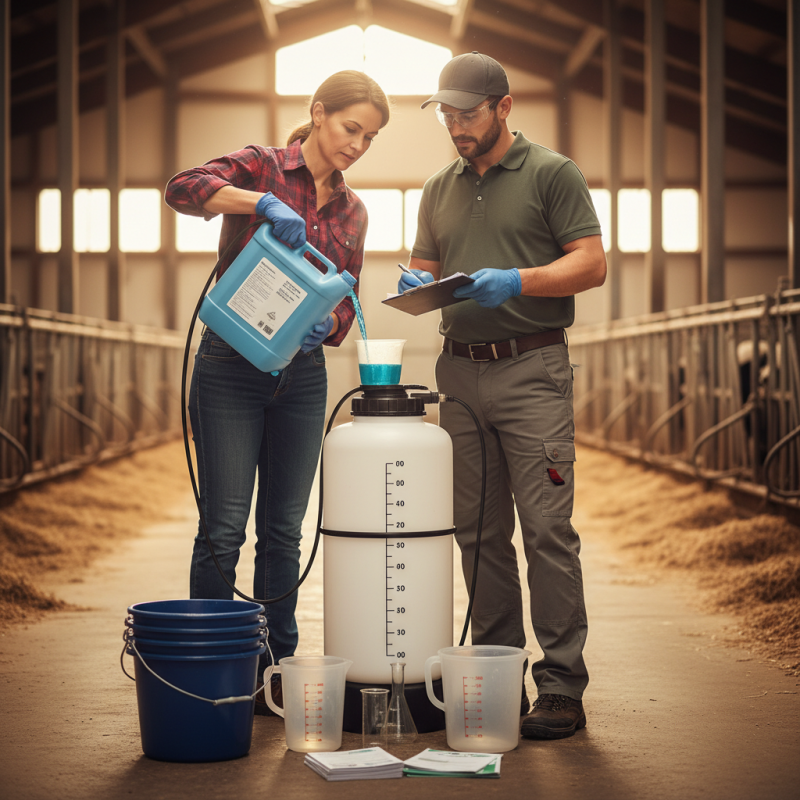
Understanding the proper dilution of farm disinfectants is crucial for effective biosecurity. Disinfectant concentrations significantly impact their effectiveness against pathogens. A study by the University of Minnesota revealed that improper dilution can reduce disinfection efficacy by up to 90%. Therefore, understanding these concentrations is key for farmers.
Farm disinfectants typically come in concentrated forms. For example, a commonly used disinfectant may be recommended at a dilution rate of 1:100. This means one part disinfectant to 100 parts water. Yet, many farmers may dilute at varying ratios, resulting in compromised cleaning effectiveness. Accurate measuring tools can help achieve the correct dilution, ensuring optimal results.
Additionally, farmers should consider their specific farm environment when choosing disinfectants. Factors such as organic matter presence can affect the effectiveness of the solution. In a report from the American Society for Microbiology, it was noted that organic debris could deactivate certain ingredients in disinfectants. This suggests that even a properly diluted solution may not perform well without adequate cleaning of surfaces first. Understanding these details can guide better practices and improve overall farm hygiene.
| Tip Number | Tip Description | Recommended Dilution Ratio | Application Method |
|---|---|---|---|
| 1 | Read the label for instructions. | As specified on label | Spraying or mopping |
| 2 | Use clean water for dilution. | 1:10 | Soaking or fogging |
| 3 | Mix in a well-ventilated area. | 1:20 | Wiping surfaces |
| 4 | Always wear protective gear. | 1:15 | Pressure washing |
| 5 | Do not mix different disinfectants. | 1:5 | Immersion |
| 6 | Check effectiveness with a test strip. | 1:30 | Application through sprayer |
| 7 | Mix in small batches. | 1:25 | Cleaning equipment |
| 8 | Label your diluted solutions. | 1:40 | Surface cleaning |
| 9 | Store in a cool, dry place. | 1:50 | General sanitation |
| 10 | Dispose of old solutions safely. | Follow local regulations | End of use cleaning |
: Proper dilution is vital for effective biosecurity against pathogens. Improper mixing can reduce effectiveness by up to 90%.
A common ratio is 1:100, meaning one part disinfectant to 100 parts water. Accurate measuring is essential.
Organic debris can deactivate disinfectant ingredients. Even well-diluted solutions may fail without prior surface cleaning.
A typical dilution is 1:128. Too much can harm livestock, while too little won't eliminate pathogens effectively.
They typically require a 1:100 dilution. Always prepare fresh solutions daily as chlorine loses potency quickly.
Conduct contact time tests and carrier testing. Record and analyze findings for future improvements.
Temperature and humidity can impact potency. Suitable conditions are necessary for accurate test results.
Regularly review dilution practices and keep detailed records of solutions. Adopt testing methods for continuous improvement.
When it comes to maintaining a healthy farm environment, understanding how to properly dilute concentrated farm disinfectants is crucial. This article outlines key considerations, starting with the importance of recognizing different disinfectant concentrations and the necessity of using high-quality water for the dilution process. Common errors, such as inaccurate measurements or the misuse of water types, can significantly impair the effectiveness of disinfectants; thus, avoiding these pitfalls is essential.
Farmers can benefit greatly from following recommended dilution ratios for various disinfectant types commonly used in agriculture. Additionally, implementing best practices for testing the effectiveness of diluted solutions ensures that they achieve optimal results in their sanitation efforts. By adhering to these guidelines, farmers can enhance biosecurity and improve overall farm management.
