 Vetsys Pharmaceutical
Vetsys Pharmaceutical
Vetsys Pharmaceutical
Diluting concentrated farm disinfectants is not a simple matter of adding water. The correct ratio, water quality, contact time, and surface condition all affect performance. A small measuring error can leave equipment under-dosed or unnecessarily harsh.
Dr. David Burch, a veterinary consultant in livestock health, offers a practical reminder: “A disinfectant only works properly when it is mixed and used as directed.” That principle guides this article’s seven best tips to dilute concentrated farm disinfectants safely and consistently. Always read the product label before opening the container. Check the recommended dilution for barns, boots, feeders, vehicles, or animal housing. Different surfaces may require different strengths.
Use a clean measuring jug, fresh water, and a clearly labeled mixing container. Do not guess by sight. It is easy to pour “a little more” and create a weaker or stronger solution than intended. Test the water when possible, because heavy minerals or organic matter can reduce disinfectant effectiveness. Remove manure, bedding, dust, and feed residue before applying any solution. Disinfectant is not a substitute for cleaning.
Keep the solution visibly wet for the stated contact time. Shortcuts happen. They still reduce protection. Never mix different disinfectants unless the label specifically permits it. Wear the required gloves, eye protection, and protective clothing, and provide ventilation indoors. Finally, record the product, dilution rate, date, and responsible worker. Learning how to properly dilute concentrated farm disinfectants requires accuracy, routine, and occasional self-checking. Even experienced teams should review their method when results seem inconsistent.
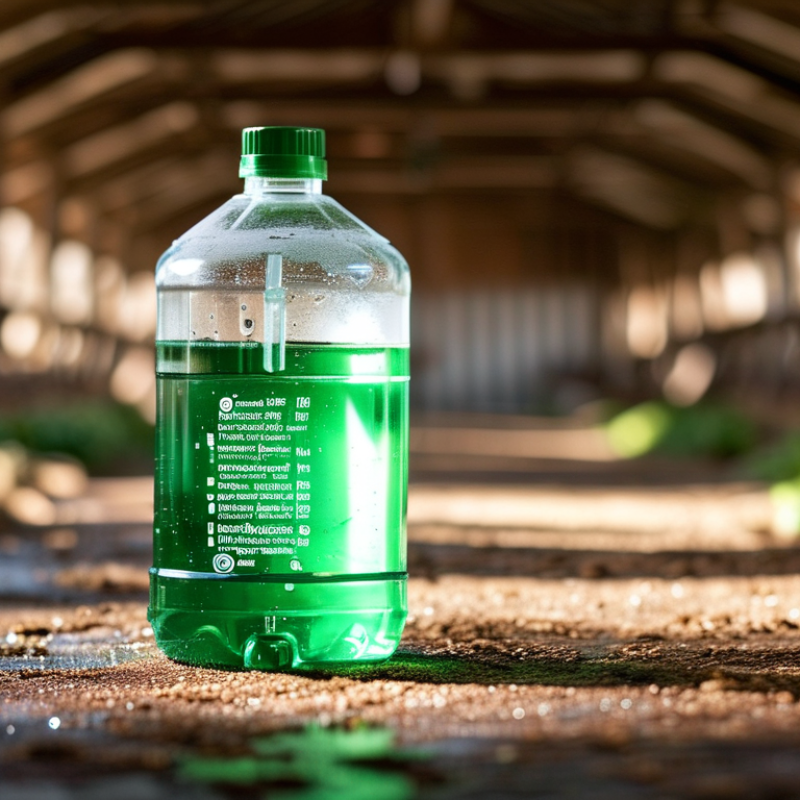
Concentrated farm disinfectants are not simply “strong cleaners.” Their performance depends on active ingredients, dilution, water quality, temperature, and contact time. The WOAH Terrestrial Manual (2023) identifies these factors as critical controls for effective farm disinfection.
Organic matter matters greatly.
Common active ingredients include quaternary ammonium compounds, chlorine-releasing agents, oxidizers, iodine compounds, and aldehydes. Each works differently. Chlorine can act quickly, but manure and hard water may reduce its activity. Quaternary ammonium compounds often perform better on cleaned surfaces, yet some detergents can interfere with them. Read the active ingredient panel, not only the product name.
Dilute by final concentration, never by guesswork. For example, producing a 0.1% solution from a 10% concentrate requires 1 part concentrate and 99 parts water, unless the label specifies otherwise. Use a clean measuring jug. Cold, visibly dirty water is a poor starting point. USDA APHIS cleaning and disinfection guidance emphasizes removing soil before applying disinfectant, because debris can shield pathogens. Keep the surface visibly wet for the full contact time. A rushed rinse may feel efficient, but it can quietly defeat the treatment. I have seen dilution errors happen when workers measure by “capfuls.” That habit deserves reconsideration. Wear the label-required protective equipment, and never mix different active ingredients.
Use clean, low-sediment water in a washed container. Mud, organic matter, and leftover chemicals may reduce performance. Room-temperature water is easier to measure. Very cold water may mix slowly.
Match the tool to the required volume. Use a graduated cylinder for liquids and a digital scale for weighed products. Small quantities may need a clean syringe. Do not use kitchen cups. Small errors matter.
Place the container on a stable bench. Confirm the target volume before adding concentrate. Read the cylinder at eye level, using the meniscus bottom. Record the measurement. Guesswork failed me once.
Add disinfectant slowly to the water. Wear gloves, eye protection, and protective clothing. Keep ventilation moving. Avoid splashing and never combine different chemical products.
Prepare only the amount needed for one work period. Record the dilution, date, and operator. Preparing too much can create a disposal problem. That mistake deserves attention.
Yes. Remove manure, feed, and visible dirt first. Organic matter can weaken disinfectant performance. Keep each treated surface visibly wet for the stated contact time. A quick spray is not enough.
Keep it in a closed, clearly marked container. Store it away from animals, feed, heat, sunlight, and incompatible chemicals. Never mix it with acids, ammonia, or other cleaners. Label details can prevent confusion.
Stop using it if it separates, changes colour, or smells unusual. Seek technical advice before proceeding. Do not pour leftovers into drains, soil, or waterways. Follow local waste instructions.
Learning how to properly dilute concentrated farm disinfectants is essential for effective sanitation and safe handling. Begin by understanding the product’s active ingredients and purpose, then read the label carefully for the correct dilution ratio, contact time, protective equipment, ventilation, and surface compatibility. Use clean water and accurate measuring tools to avoid weakening the solution or creating an overly strong mixture. Measure the water first, add the disinfectant slowly according to the instructions, and mix gently in a suitable container to reduce splashing and fumes.
After preparation, apply the diluted solution evenly to pre-cleaned surfaces and allow it to remain wet for the required contact time. Keep the mixture clearly identified, protected from heat and contamination, and use it within the recommended period. Never combine disinfectants with other chemicals unless the label specifically permits it. Dispose of leftover solution and empty containers according to local guidance, while keeping people, animals, feed, and water sources protected throughout the process.
