 Vetsys Pharmaceutical
Vetsys Pharmaceutical
Vetsys Pharmaceutical
How to improve eggshell quality with microelement premixes begins with a clear understanding of the flock, its feed, and its production stage. Thin, rough, or cracked shells can reduce saleable eggs and signal nutritional or management problems. A premix can help, but it is not a stand-alone fix.
Poultry nutrition expert Dr. Michael Lilburn is known for work in poultry nutrition. The following is an editorial summary, not a verbatim quotation: “A balanced diet and sound flock management matter more than any single nutrient.” That distinction matters. Zinc, manganese, copper, and selenium support different biological functions, but their value depends on appropriate levels and interactions with calcium, phosphorus, and vitamin D. More is not automatically better. Excess or poorly balanced minerals may waste money and can disrupt nutrient utilization.
This guide explores how to improve eggshell quality with microelement premixes through practical formulation checks. It considers mineral sources, inclusion rates, mixing consistency, and feed analysis. It also covers factors outside the premix, including hen age, heat stress, water access, and disease pressure. A shell that breaks under light handling deserves investigation. Start with records: crack rates, shell appearance, feed batches, and flock age. Then review the complete ration with a qualified poultry nutritionist. Results vary. Premixes should be selected for the flock and verified through careful monitoring, not assumed to work from a label alone.
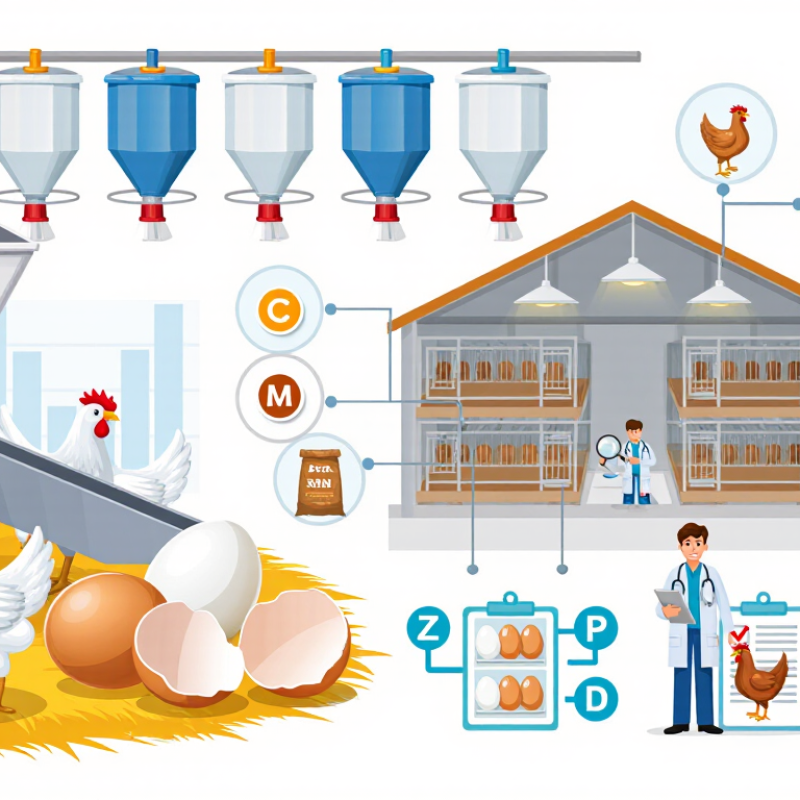
Eggshell Structure and Key Quality Indicators
An eggshell is more than a hard outer coat. Its calcified layers form around a protein-rich matrix, while the shell membranes help resist bacterial entry. Reviews of eggshell formation report that calcium carbonate makes up about 95% of shell mineral content (Nys et al., 2004). The cuticle matters, too. It can look uneven.
For flock checks, track shell thickness, breaking strength, shell percentage, and the share of cracked or soft-shelled eggs. The USDA Egg-Grading Manual emphasizes a clean, unbroken, sound shell for quality grading. A single measurement can still mislead: egg size, hen age, sampling time, and meter technique affect readings. Record the method and compare like with like.
Microelement premixes support the processes behind shell formation, but they cannot replace adequate calcium, phosphorus, or sound feeding practice. Manganese, zinc, and copper contribute to enzyme activity and shell-matrix formation. The detail is easy to miss. Check premix inclusion against the full ration, then review shell data alongside feed intake and flock age. If cracks rise, inspect the actual eggs and records before changing the formula; the cause may not be a trace-mineral shortage.
Manganese supports the shell’s organic matrix. Zinc helps enzymes involved in carbonate production, while copper supports connective tissues. Small amounts matter.
One guide gives approximately 100 mg/kg manganese, 60 mg/kg zinc, and 5 mg/kg copper. These are references, not universal targets.
Not by itself. A premix cannot replace adequate calcium, suitable calcium particle size, or consistent feed intake. I would be cautious about blaming every crack on trace minerals.
Review the complete ration, basal feed analysis, and expected daily intake. Bird age and production rate matter, too. More is not automatically better.
Use a suitable carrier and check mixing with a representative sample. Similar particle sizes can help. Poor dispersion may leave some feed short and other portions concentrated.
Record cracked-egg rates, shell thickness, and specific gravity by house and time period. A micrometer can reveal gradual thinning. Candling can help spot cracks.
A reference for laying hens is 3.25% dietary calcium at 100 grams of feed daily. Heat may reduce intake, so actual calcium consumed can fall.
Heat stress, water quality, disease, and feed uniformity may all matter. Change one factor at a time. Otherwise, the cause can remain unclear.
Eggshell quality depends on a well-formed shell structure and adequate supplies of nutrients needed throughout shell formation. Microelements such as zinc, manganese, copper, and selenium support processes involved in shell development, but the right balance depends on the flock’s age, production stage, diet, and management conditions. Reviewing feed composition, shell appearance, breakage rates, and other flock records can help identify possible gaps and guide decisions about supplementation.
A balanced microelement premix should complement the complete diet rather than replace good nutrition and flock management. Its formulation and inclusion rate should account for existing nutrient contributions and the birds’ needs. After introducing a premix, producers can monitor shell thickness, strength, defects, and breakage over time, while also considering factors such as feed intake and housing conditions. This measured approach explains how to improve eggshell quality with microelement premixes and helps refine feeding practices based on observed results.
