Achieving even mixing of medicated powder in large scale feed mixers is crucial for livestock health and productivity. According to the American Feed Industry Association, improper mixing can lead to inconsistent dosing, affecting animal welfare and farm profitability. Industry experts stress the need for precise techniques to ensure a uniform blend.
Dr. James McNulty, a renowned expert in animal nutrition, emphasizes, "How to mix medicated powder evenly in large scale feed mixers is vital for achieving optimal feed efficiency." This highlights the critical role of effective mixing in the feed manufacturing process. The consequences of inadequate blending can include reduced treatment efficacy and potential nutrient imbalances.
In this context, understanding the factors impacting mixing performance becomes essential. Variables like mixer design, processing time, and powder characteristics play a significant role. As the industry evolves, adopting best practices for mixing will remain a challenge that requires ongoing reflection and improvement. Balancing these elements is key to ensuring that medicated feeds meet the expected standards of safety and effectiveness.
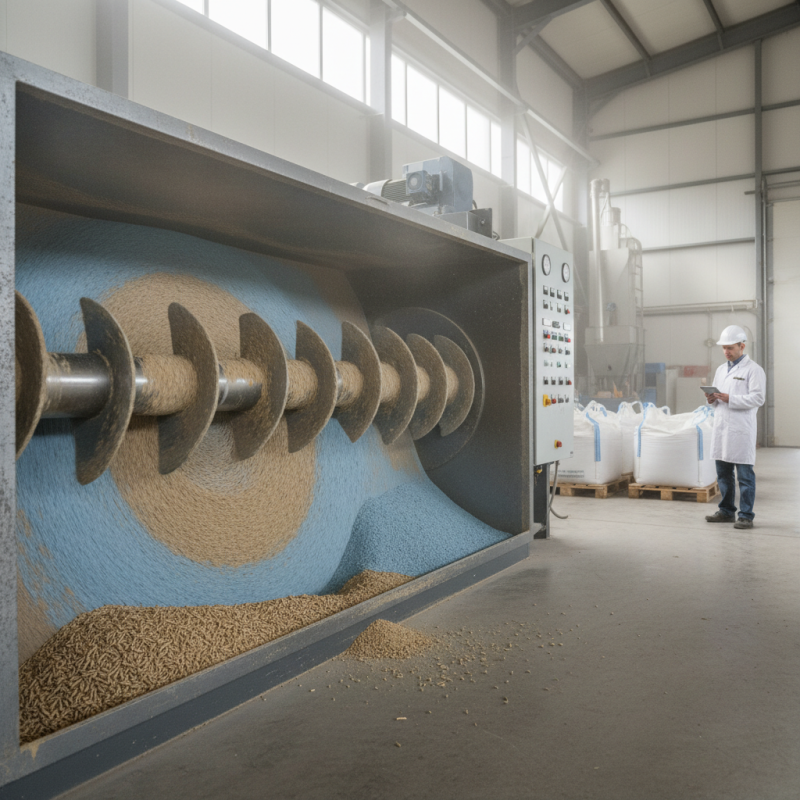
Understanding the Importance of Even Mixing in Feed Production
Even mixing of medicated powders in feed is critical for animal health. Inconsistent distribution can lead to overdosing or underdosing. This imbalance can affect growth and overall well-being. Ensuring uniformity in feed production not only enhances the effectiveness of the medication but also builds trust with consumers.
In feed mixers, various factors impact the mixing process. The design of the mixer plays a vital role. Some mixers may not achieve uniformity, especially with different particle sizes. Operators must regularly inspect and maintain equipment to avoid these issues. Additionally, the order of ingredient addition can lead to uneven mixing. Some combinations might cause clumping, which hampers even distribution.
Successful feed production requires a commitment to quality. Understanding the science behind mixing is essential. A deep knowledge of the materials involved and the mixing process is needed. Experiments and adjustments can help you identify optimal procedures. It's important to reflect on past failures and learn from them. These experiences guide improvements in the mixing process, ultimately benefiting animal health and growth.
Types of Medicated Powders and Their Characteristics
Medicated powders play a crucial role in feed formulation, directly affecting animal health and productivity. Various types of medicated powders are common in the industry, including antibiotics, probiotics, and vitamins. Each type has unique characteristics that impact their functionality in feed. According to a 2020 study, over 60% of livestock producers use medicated powders for enhanced growth and disease prevention. Antibiotics, for example, are designed to promote feed efficiency but may also lead to concerns about resistance.
Probiotics, on the other hand, are increasingly favored for their ability to support gut health. They can enhance nutrient absorption and generally improve overall animal vitality. A report by the Animal Nutrition Association revealed that probiotics account for around 15% of the medicated powder market. This growing interest necessitates an understanding of their application, especially in mixed feeds. However, ensuring proper distribution within the feed remains a challenge.
Mixing techniques significantly influence efficacy. Uneven distribution can result in variable dosing, leading to reduced performance or health issues. Research shows that achieving a homogenous blend requires precise measurement and tailored mixing times. Key factors like mixer type, speed, and powder particle size warrant careful consideration. Maintaining a balance of these elements is essential to prevent underdosing or overdosing, impacting animal welfare and production costs.
Factors Affecting Mixing Efficiency in Feed Mixers
Achieving an even mix of medicated powder in feed mixers depends on multiple factors. The
design of the mixer plays a critical role in the blending efficiency. Paddle or ribbon mixers provide different mixing capabilities. Proper geometry ensures uniform dispersion of micro-ingredients throughout larger feed particles.
Another significant factor is the order of ingredient addition. Adding medicated powder later might hinder its even distribution. The mixing time is also crucial; a common mistake is underestimating how long mixing truly takes. Observations show that even a minute can improve consistency significantly.
Tips: Always perform small test blends first. This allows for real-time observation of mix uniformity. Monitor moisture levels in both powder and bulk feed. High moisture can cause clumping.
Consider mixing speed settings as well. Too fast can cause segregation. Too slow might lead to incomplete mixing. Ultimately, it’s about finding the right balance, which requires continuous effort and refinement.
Best Practices for Achieving Uniform Distribution of Medicated Powders
Achieving uniform distribution of medicated powders in feed mixers is critical for animal health. Variability in mixing can lead to underdosing or overdosing, impacting efficacy. To ensure consistency, it is important to consider both the equipment and mixing techniques used.
One effective practice is to adjust mixer speed according to the properties of the medicated powder. Fine powders may require slower speeds to prevent segregation, while coarser materials can handle faster speeds. Regular maintenance of the mixer also plays a role in achieving even mixing. A worn-out machine may lead to uneven distribution, causing inconsistent feeding outcomes.
Additionally, the order of ingredient addition can influence mixing efficiency. Introducing medicated powders slowly while monitoring the mix can help achieve a more homogeneous blend. Operators should be trained to recognize signs of poor mixing. A visual inspection can reveal clumps or uneven coloration, indicating a need for adjustment. Reflection on these practices is essential for continual improvement in feed mixing processes.
Maintenance and Calibration of Mixers for Optimal Performance
Proper maintenance and calibration of feed mixers are vital for achieving an even distribution of medicated powders.
According to the American Society of Agricultural and Biological Engineers, uneven mixing can result in inconsistent dosages, affecting animal health and productivity.
Regular maintenance ensures that mixers operate efficiently, minimizing wear and tear that can lead to poor mixing results.
Calibration is equally important. Using a calibrated mixer allows for precise measurement of ingredients.
Studies show that even a 5% error in mixing can lead to significant variations in nutrient delivery.
Users should regularly check component settings, ensuring that they match manufacturer specifications.
Neglecting this step may result in suboptimal feeding practices and reduced feed quality.
Routine inspection of mixer parts is essential. For instance, worn blades might not mix components thoroughly.
This oversight can create inconsistent product batches. Implementing a systematic approach to maintenance can help identify issues early.
True, it takes time, but it significantly impacts overall performance.
Assessing the condition of the mixer regularly helps in achieving the desired mixing quality.
FAQS
: Even mixing ensures proper distribution of medicated powders. It prevents overdosing and underdosing, affecting animal health.
Mixer design is crucial. Different mixers handle various particle sizes differently, impacting overall mixing efficiency.
Adding medicated powder last may lead to uneven distribution. Early addition often results in better mixing.
Many underestimate mixing time. Even a minute longer can improve consistency and ensures better uniformity.
Regular inspection and maintenance are essential. This helps avoid equipment issues that prevent uniform mixing.
High moisture can lead to clumping. This clumping hampers the even distribution of ingredients in feed.
Yes, small test blends are important. They allow real-time observation of uniformity before larger batches.
Too fast can cause segregation, while too slow might lead to incomplete mixing. Balance is key.
It's important to learn from past mistakes. Reflecting helps identify areas for improvement in mixing practices.
There isn’t a one-size-fits-all. Continuous effort and adjustments based on experimentation are needed for optimal results.
Conclusion
Achieving even mixing of medicated powder in feed production is crucial for ensuring the efficacy of animal feed. Understanding the characteristics of different types of medicated powders is essential, as their physical properties can significantly impact the mixing process. Factors such as mixer design, speed, and batch size play a vital role in determining mixing efficiency.
To effectively learn how to mix medicated powder evenly in large scale feed mixers, it is important to implement best practices, which include appropriate loading techniques and batch sequencing. Regular maintenance and calibration of mixers will also enhance performance and ensure consistent results. By focusing on these aspects, producers can improve the overall quality of their feed products and maintain optimal animal health.
 Vetsys Pharmaceutical
